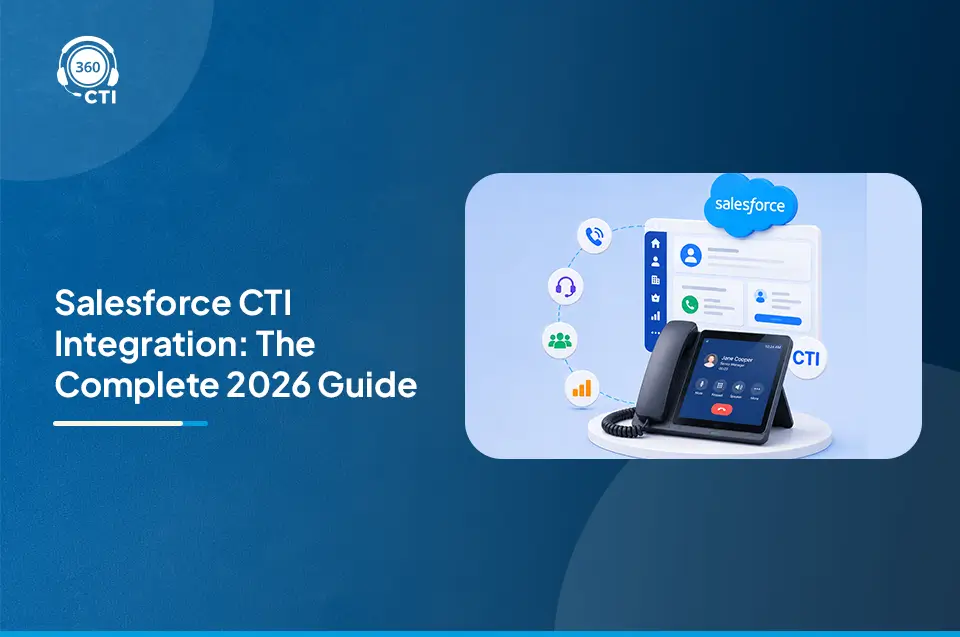


While Marketing and Sales have embraced digital channels, telephones remain a trusted tool for connecting with prospects and closing deals. There’s no substitute for a compelling sales pitch delivered smoothly over the phone to win over a potential customer. However, the manual tasks of dialing numbers and logging calls can drain your team’s productivity. Sales representatives typically spend over 35% of their work hours on these repetitive tasks. Imagine the potential growth if this time were redirected to more innovative and creative activities! Salesforce telephony integration is designed to achieve exactly that.
Salesforce CTI Integration is a powerful productivity enhancer. Beyond boosting sales, it strengthens your service and support with intuitive routing and customer identification features. By automating call handling and enhancing collaboration through fully integrated cloud-based solutions, it enables your representatives to efficiently manage higher customer volumes.
So, to cover the importance of this integration, we’ll be covering some top features and the kind of value it can deliver that would make this integration a holy grail for the service team in any business.
Top Features You Can Access with Salesforce Telephony Integration
What makes CTI integration with Salesforce so popular among service teams is the suite of amazing features that it carries along. So, we’ll be covering some of those features here and the kind of benefit they offer.

1. Automated Dialing
CTI integration with Salesforce helps support teams to establish streamlined communication, which is made possible by automated dialing features like predictive dialing, auto-dialers, and click-to-call. Predictive dialing enables bulk calling, directing live calls to available agents. Click-to-call lets customers start calls by clicking links within apps or websites.
2. Screen Pop Ups
CTI boosts efficiency by giving agents automated screen pop-ups with detailed customer information for incoming calls. Agents can swiftly access key details, such as caller authentication (ANI or DNIS), call history, and customer data. This unified view removes the need for manual information retrieval, allowing agents to provide personalized and efficient customer service.
3. Call Transfer and Routing
CTI utilizes Automatic Call Distributor technology to enable data-driven call transfers and routing. By cross-referencing incoming call information with the company’s database, it smartly directs calls to the most qualified agent based on their expertise. For instance, if a customer has a refund inquiry, the Salesforce CTI system identifies the right agent and automatically routes the call to them.
4. Streamlined Phone Controls
Salesforce CTI equips agents with comprehensive phone control features, including call management, merging, forwarding, and more. By integrating all these functions into one platform, agents can effortlessly manage customer interactions without the need to switch between phone and computer systems.
How Salesforce Telephony Integration Boosts Team’s Potential
All the features that the Salesforce CTI integration supports all falls back to how exactly they are helping to boost the potential of the team. Here are a few points that would shed a light on this.
1. Easier Call Handling for Effortless Engagement
Cloud Telephony integration with Salesforce streamlines call handling, enhancing efficiency and reducing effort for representatives. With an embedded dialer within Salesforce and other CRM or customer service software, reps can initiate calls by simply clicking on a contact’s name or number on their screen. This eliminates the need to switch between applications or use separate dialing tools. This seamless integration boosts productivity, enabling reps to concentrate on engaging with prospects or customers and delivering outstanding service.
2. Improved Agent Experience
Salesforce CTI integration provides a significant advantage by removing the need for agents to constantly switch between different programs. With Salesforce telephony integration, agents can access caller information and all relevant data from a single dashboard or screen, eliminating the need to navigate between various messaging apps to make calls or gather information.
3. Simplified Performance Tracking for Managers
Managers can capture both inbound and outbound calls to oversee how agents engage with customers during calls. They can use analytics tools to gain insights into customer behavior and trends, allowing them to generate reports that align with these insights.
4. Keep Data Up-To-Date
With CTI integration with Salesforce, you benefit from automatic call logging, which creates a record of conversations for addressing customer issues. To further enhance your capabilities, consider a CTI or telephone system integrated with Salesforce that includes built-in call recording and transcription. This feature provides stronger evidence in case disputes arise.
The key is to ensure real-time functionality. You can promptly respond to any issues and proactively address them before they escalate with real-time access to call logs and recordings.
Hire Certified Experts for Salesforce Telephony Integration
Integrating Salesforce CTI can revolutionize how your agents interact with customers, leading to exceptional engagement experiences. It streamlines communication, enhancing the overall customer experience. Salesforce CTI efficiently handles customer inquiries, complaints, and requests, ensuring that customers leave interactions satisfied with all their questions answered. However, integrating Salesforce CTI can be complex, especially for organizations lacking internal development capabilities. To simplify this process, consider seeking assistance from Salesforce professionals. Contact us and connect with the best in the industry to make the most of the Salesforce implementation and telephony process.